

Introduction to Ikat Weaving
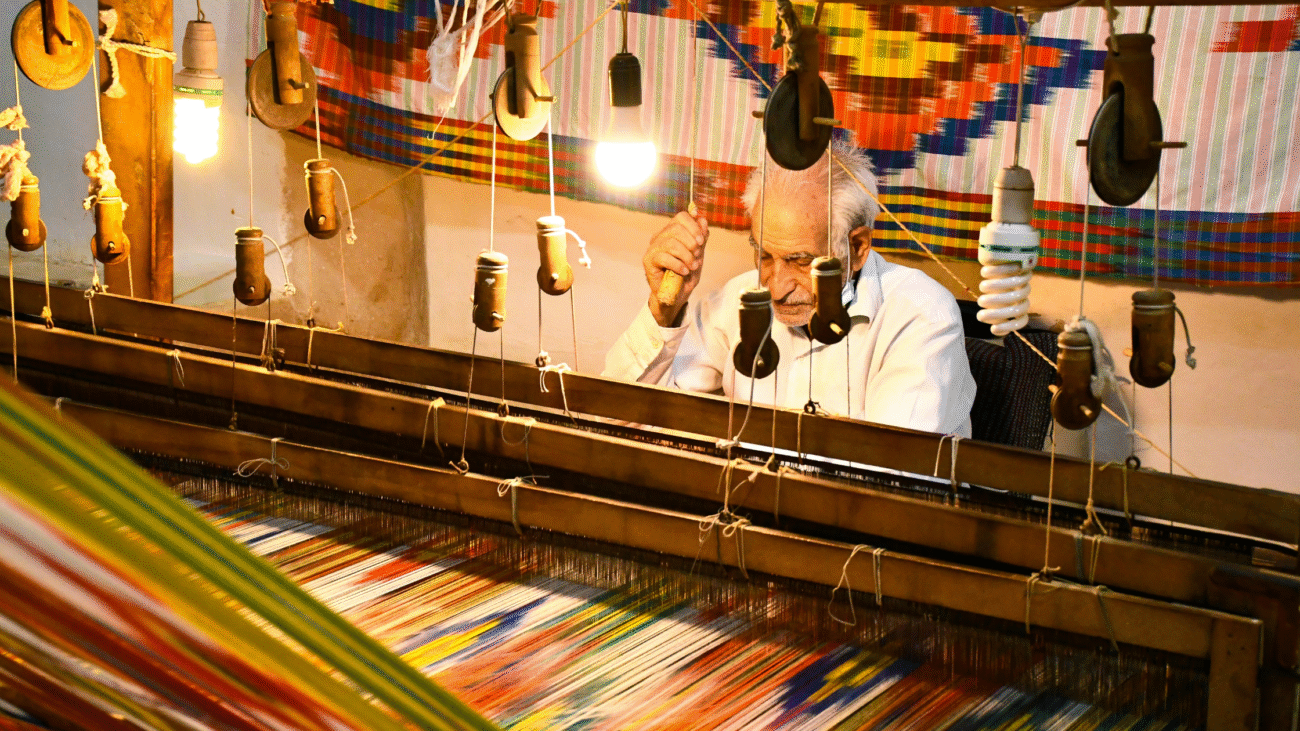
Ikat – a weaving technique that has been a part of human history for over a thousand years is instantly recognisable for its feathered patterns and mesmerising play of colours. Unlike printed fabrics, Ikat patterns are created by resist-dyeing yarns before weaving , resulting in its distinctive soft-edged designs.
India is home to some of the world’s most celebrated ikat traditions , from Pochampally Ikat in Telangana to Patola in Gujarat and Sambalpuri in Odisha. In Fact each region brings its own unique motifs ,dyeing methods and cultural symbolism to the craft. Historically ,families treasured these traditional craft fabrics ,passing them down for generations.
The Craft Reimagined
In the past, people closely associated this resist- dyeing technique with saris , dupattas, and stoles in earthy or jewel toned colours. But today’s designers are challenging that perception. Ikat is stepping into the realm of modern couture -gracing runway gowns , sharply tailored jackets ,contemporary co-ords and even accessories.
A few key shifts have powered this transformation :
- Experimental Colour palettes – Neon gradients , chrome accents, and unexpected contrasts are replacing the strictly traditional color combinations.
- Hybrid Techniques – The traditional weave is being layered with prints, embroidery and metallic yarns to create multi-dimensional textures.
- New Silhouettes – From sculpted evening dresses to streetwear-inspired jackets , Ikat is no longer confined to draped forms.